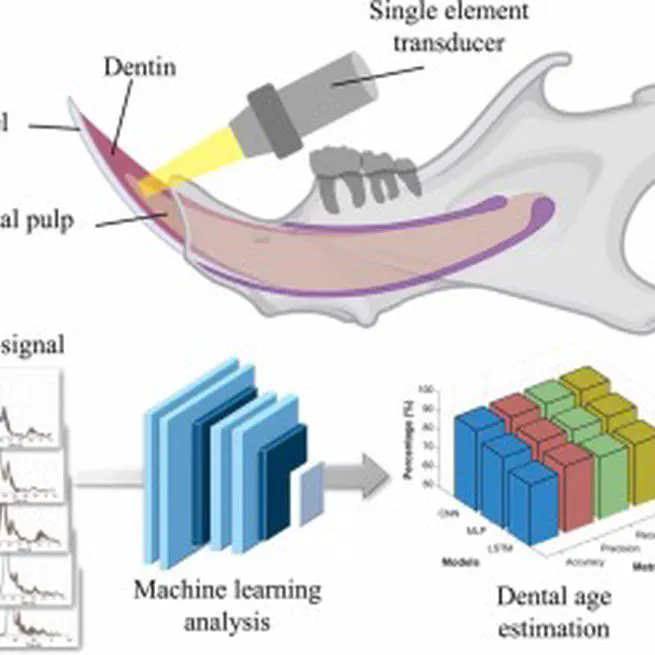
Tooth aging monitoring system based on secondary dentin analysis using ultrasound and artificial intelligence
Aug 1, 2026
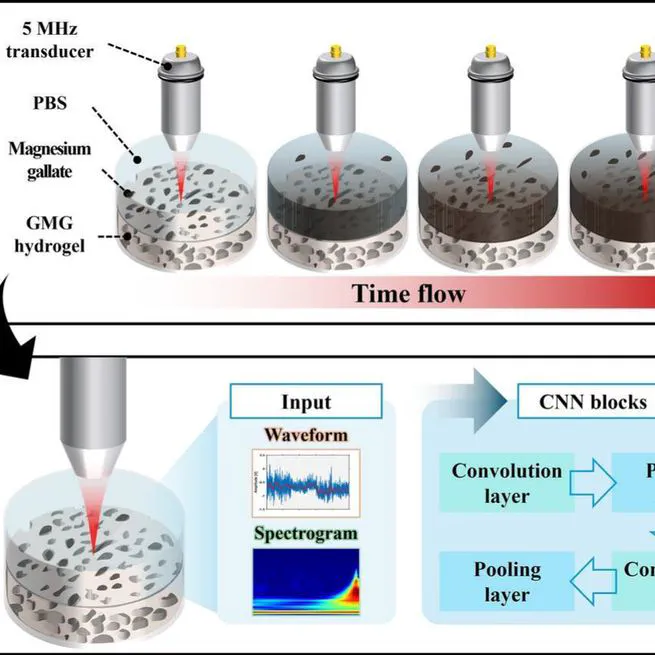
Non-invasive drug-release monitoring via AI-enhanced ultrasound in gelatin-magnesium gallate hydrogels
In summary, non-invasive monitoring of drug-release patterns fills a critical gap in drug-delivery research. Our study demonstrates the ability of deep learning frameworks to capture changes in ultrasound signals from hydrogels with varied concentrations of the crosslinker (magnesium gallate) and at different time points during the drug-release process, enabling automated profiling of drug release. First, we fabricated GMG hydrogels stabilized through magnesium gallate-mediated crosslinking and established ML models to differentiate the hydrogels based on crosslinker concentration under different dispersion medium (DMEM, 1x PBS, and water). For AI-based hydrogel concentration classification, the hybrid CNN-BiLSTM model performed best in the DMEM and 1x PBS conditions, with accuracies of 98.35% and 98.68%, respectively. In the water condition, the hybrid BiGRU model was more suitable, achieving an accuracy of 95.67%. Additionally, we successfully demonstrated gallic acid release patterns through ML analysis of processed ultrasound signals from hydrogels at various stages of drug release, indicating distinct degradation profiles. For time-based monitoring of hydrogel-mediated drug delivery, both the hybrid CNN-BiLSTM and BiGRU models achieved perfect classification accuracy (100%) across all experimental conditions (in vitro without HIFU, ex vivo, and in vitro with HIFU), highlighting their strong applicability for this task. However, the spectrogram-based multi-branch ViT-tiny model showed less favorable performance compared to the other architectures. This study does not extend to in vivo drug release profiling due to constraints such as respiratory motion artifacts and physiological barriers beyond the skin layer. Future studies should focus on developing dual-functional materials that harmonize robust thermal stability with enhanced acoustic responsiveness. Particularly, addressing signal attenuation caused by the thermal dissolution of the gelatin matrix is essential to extend the monitoring window in physiological environments. By integrating such thermally resilient scaffolds with motion-artifact-compensated algorithms, next-generation ultrasound-integrated hydrogel systems can realize their full potential for both precision drug release and long-term clinical monitoring.
May 7, 2026
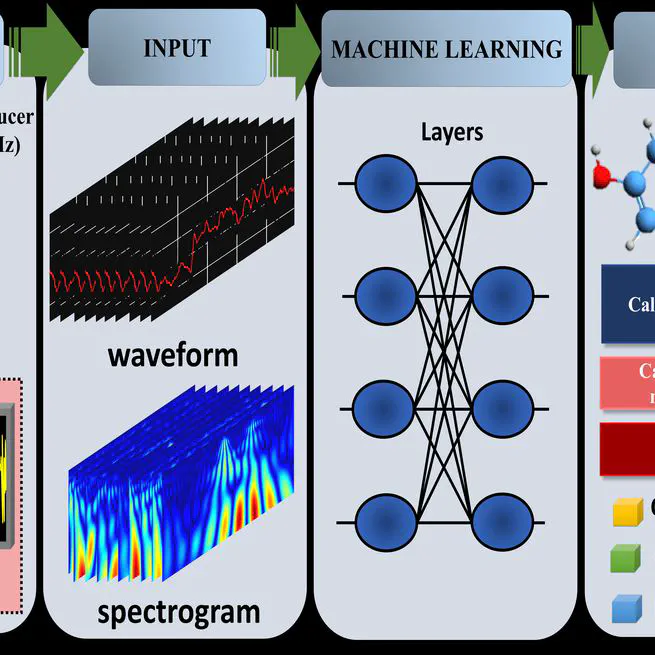
Decoding chemical composition of urinary crystals from ultrasonic echo signals via deep learning
Mar 31, 2026
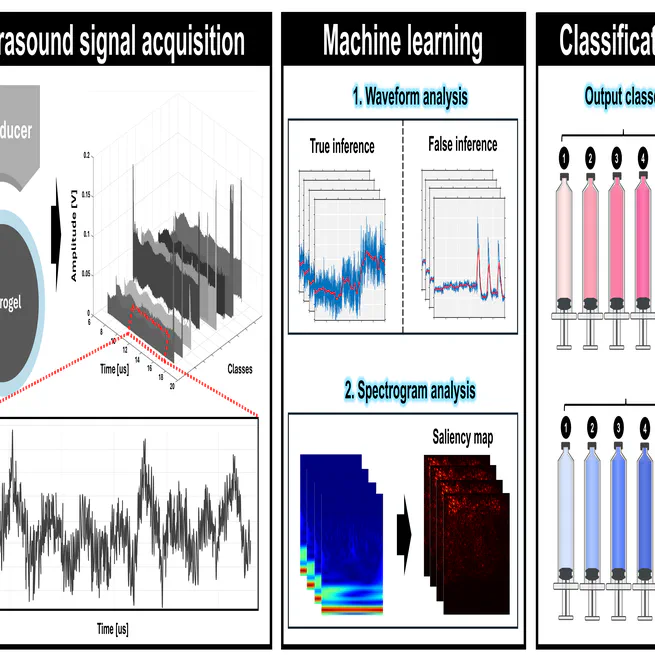
AI-augmented ultrasound analysis of noninvasive quantification of hydrogels concentration for bioprinting
Mar 26, 2026
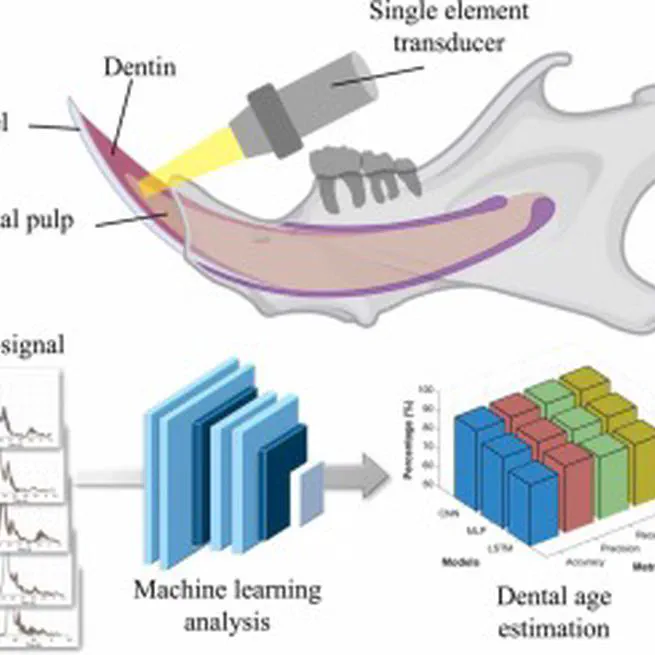
Tooth aging monitoring system based on secondary dentin analysis using ultrasound and artificial intelligence
Jan 1, 2026
Decoding chemical composition of urinary crystals from ultrasonic echo signals via deep learning
Add the full text or supplementary notes for the publication here using Markdown formatting.
Jan 1, 2026
AI-augmented ultrasound analysis of noninvasive quantification of hydrogels concentration for bioprinting
Add the full text or supplementary notes for the publication here using Markdown formatting.
Jan 1, 2026
Face Spoofing Detection using Deep Learning
Add the full text or supplementary notes for the publication here using Markdown formatting.
Jan 1, 2025
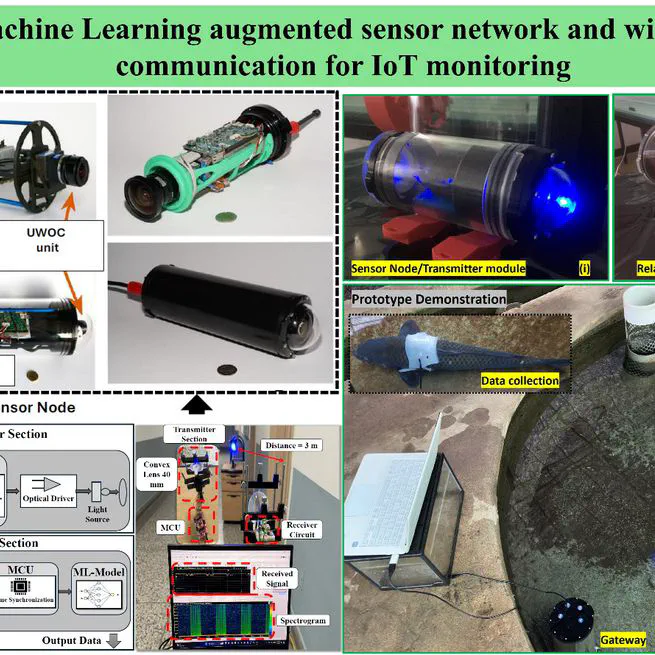
Machine learning-Assisted Object Monitoring supported by UWOC for IoUT
The research introduces an advanced fish movement tracking system that addresses critical challenges in underwater monitoring. By developing a lightweight sensor node integrated with an Inertial Measurement Unit (IMU) and underwater optical wireless communication (UWOC) modem, the system enables real-time data transmission and movement analysis. The technological innovation centers on sophisticated relay performance enhancement through software-based combining techniques like Majority Logic Combining (MLC), Equal Gain Combining (EGC), and Selection Combining (SC). These methods are intelligently integrated into the microcontroller to optimize communication reliability and signal processing in challenging underwater environments. A key contribution is the adaptive communication algorithm (ACA), which strategically exploits combining techniques to improve underwater wireless optical communication performance. The system's prototypes underwent rigorous testing in a 4-meter water tank, validating its feasibility and practical applicability. The research further advances underwater monitoring by developing machine learning models—including LSTM, Spatial Attention, RNN, Transformer, and GRU—trained on comprehensive IMU sensor data. These models analyze complex fish movement parameters, predicting acceleration states with remarkable precision and offering unprecedented insights into aquatic behavior.
Dec 5, 2024
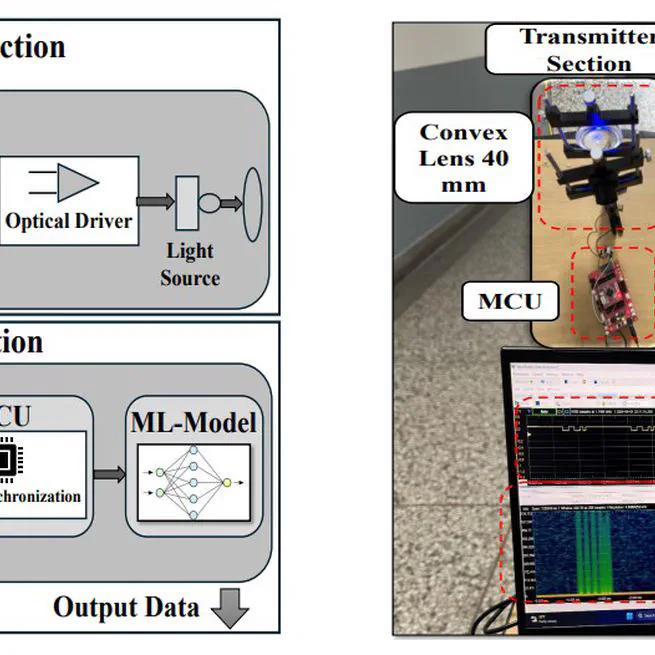
Image-based VLC Signal Demodulation Using Machine Learning
This letter presents an image-based demodulation technique for OOK-modulated VLC signals from air quality sensors. We optimized system performance by transforming received signals into images using segmentation algorithms, bicubic interpolation, and image thresholding, enhancing demodulation accuracy through data augmentation. Experimental results show that our ML-driven demodulator achieves 97.58% accuracy, an extended communication range of up to 10 m, and improved noise tolerance. These advancements indicate that our proposed system is more efficient than conventional demodulation schemes. In future studies, we aim to improve VLC range, data rate, and noise tolerance by replacing the photodiode with an image sensor for various modulation schemes. We will also explore the effects of varying light conditions and signal interference in real-world VLC environments.
Nov 22, 2024